Pressure Washing O'Fallon IL — Siding, Concrete, Wood
Pressure washing O'Fallon IL homeowners can book by surface, not by package. Siding and roofs get low-pressure soft washing; concrete gets a 3,000–4,000 PSI surface cleaner; wood decking gets neither. Tell us what needs cleaning and we will come take a look.
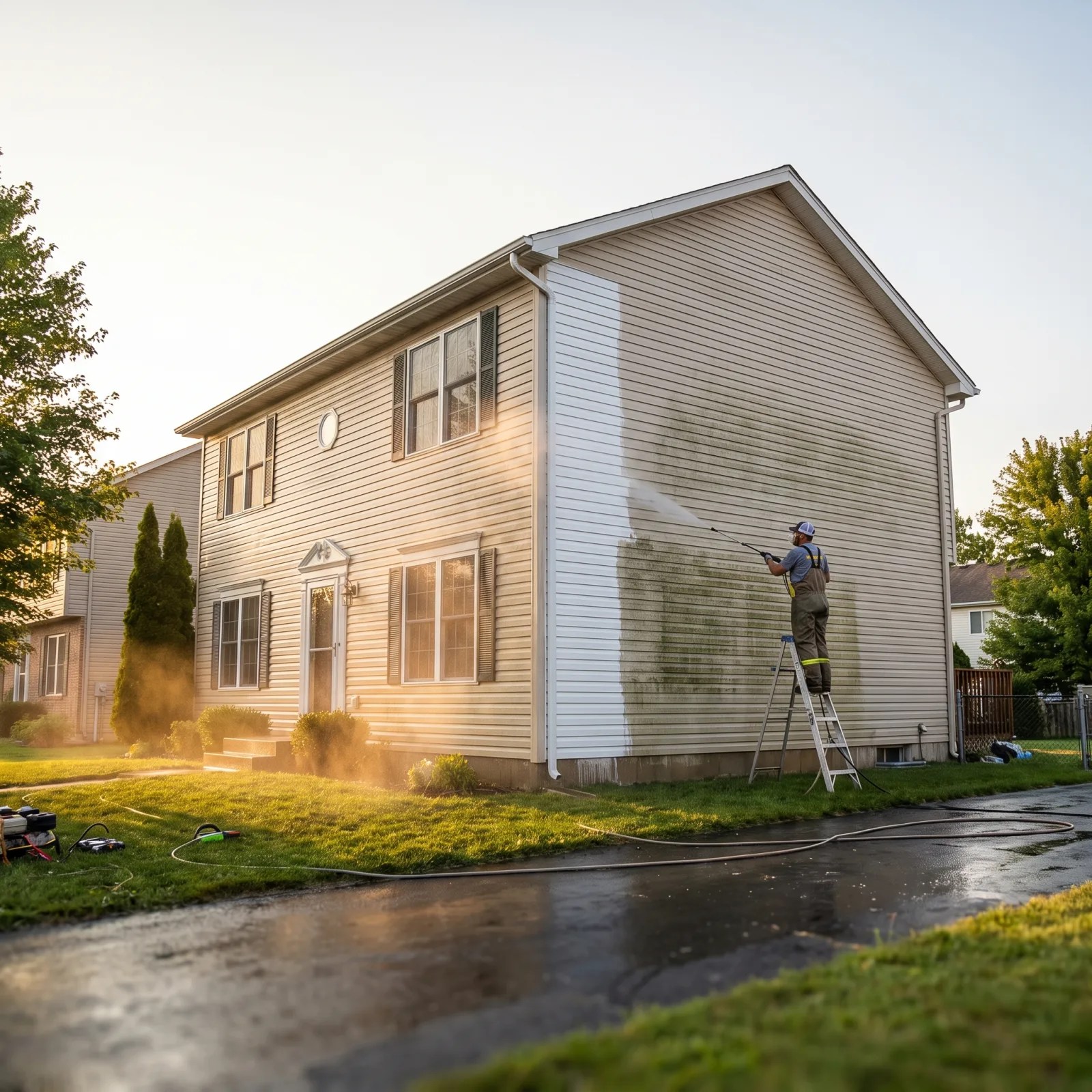
Our O'Fallon Pressure Washing Services
Four surfaces, four different methods. Siding, concrete, wood and hardscape each fail in their own way here, and each takes a different pressure and a different chemistry — so we price and plan them separately rather than selling one "whole house wash."
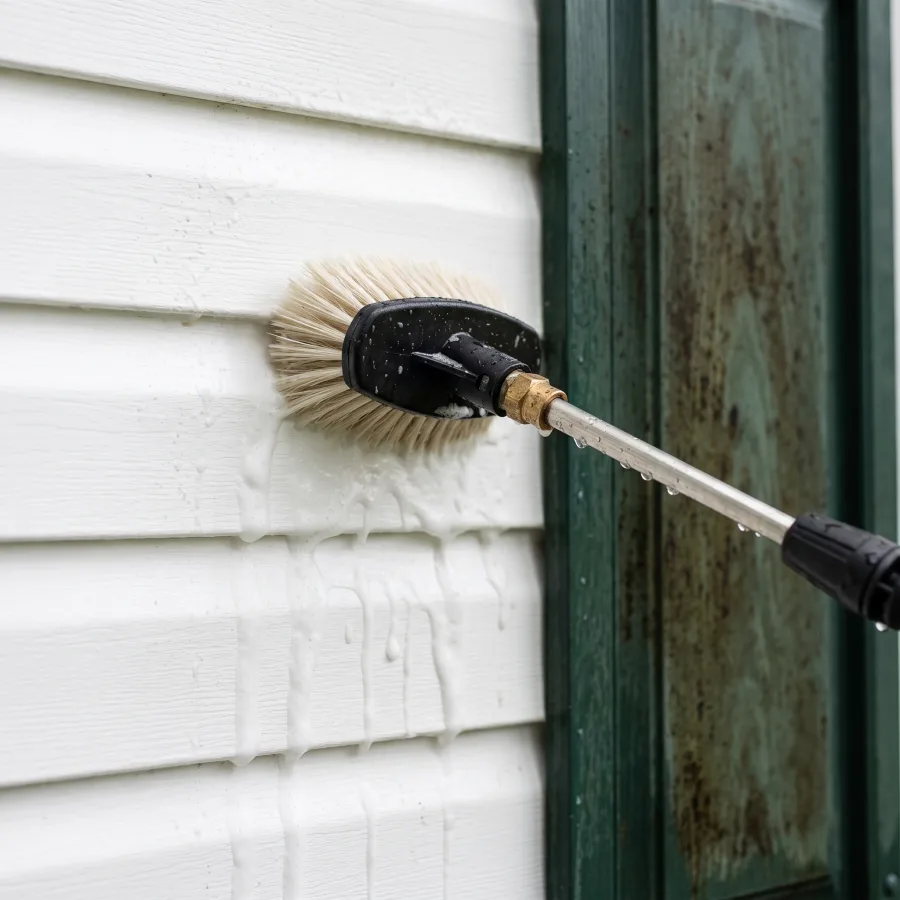
House soft washing
Soft washing is a low-pressure method that relies on a cleaning solution rather than impact. A garden hose runs around 50 PSI — under 2% of what a concrete surface cleaner puts down — and that is the neighborhood soft washing works in. The solution itself is mostly water: a typical mix is diluted to roughly 1–3% sodium hypochlorite, so about 97% of what lands on your siding is water. It is applied, left to dwell about 10 to 15 minutes so it breaks down the algae and mildew at the root, then rinsed off. Because the growth is removed rather than just knocked loose, a soft-washed wall stays clean noticeably longer than a blasted one.
That matters in the Metro East because our summers are humid enough to keep north- and east-facing walls damp for most of the day. Those shaded elevations are where the gray-green streaking shows up first, usually under the gables and behind shrubs. High pressure on vinyl lap siding drives water up behind the panels and into the wall cavity, where it does not dry out; on stucco and EIFS it strips the finish coat outright. Soft washing avoids both, which is why it is the only method we use on siding, soffit and roofs.
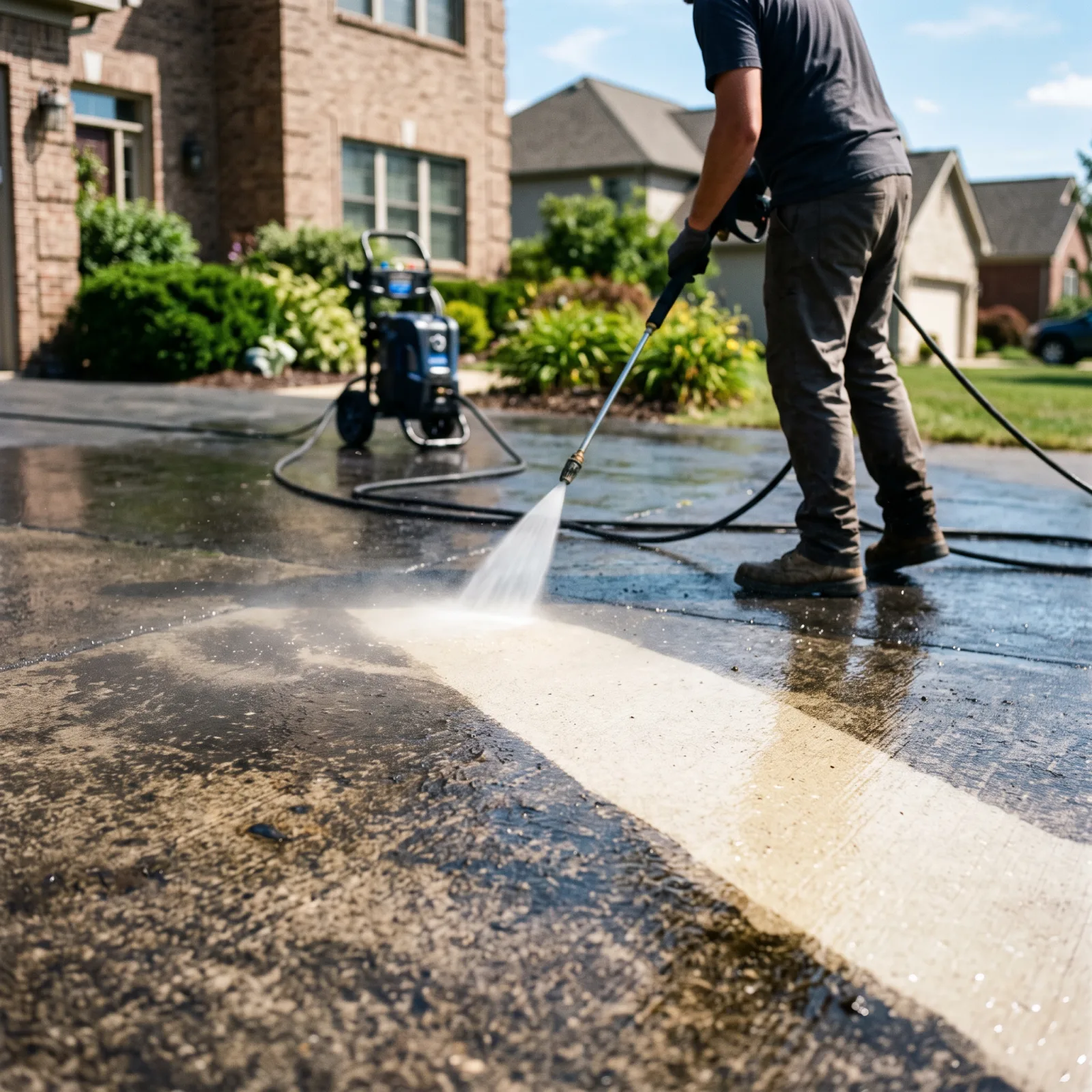
Driveway & walkway pressure washing
Concrete is the one surface that genuinely wants force. We run a rotating surface cleaner at roughly 3,000–4,000 PSI, which keeps the spray perpendicular to the slab and moving at a constant rate — that is what produces an evenly cleaned driveway instead of the striped, wand-waved look you get from a hand lance. A typical two-car drive here runs somewhere between 600 and 1,000 square feet, so the pass itself is quick; the time goes into edges and pre-treatment. Oil and rust spots get treated separately before the surface pass, because pressure alone will not lift them.
Illinois driveways here take a specific kind of abuse: road salt through the winter, then freeze-thaw cycling that works that salt down into the pores. Washing in spring pulls the residue out before it sits through another season. Pavers and stamped concrete are a different job — those come down to roughly 1,200–1,500 PSI, because full pressure blows the jointing sand out from between pavers and will erode the release coat on stamped work. If your driveway is sealed, tell us; sealed concrete gets a gentler pass so we are not stripping a finish you paid for.
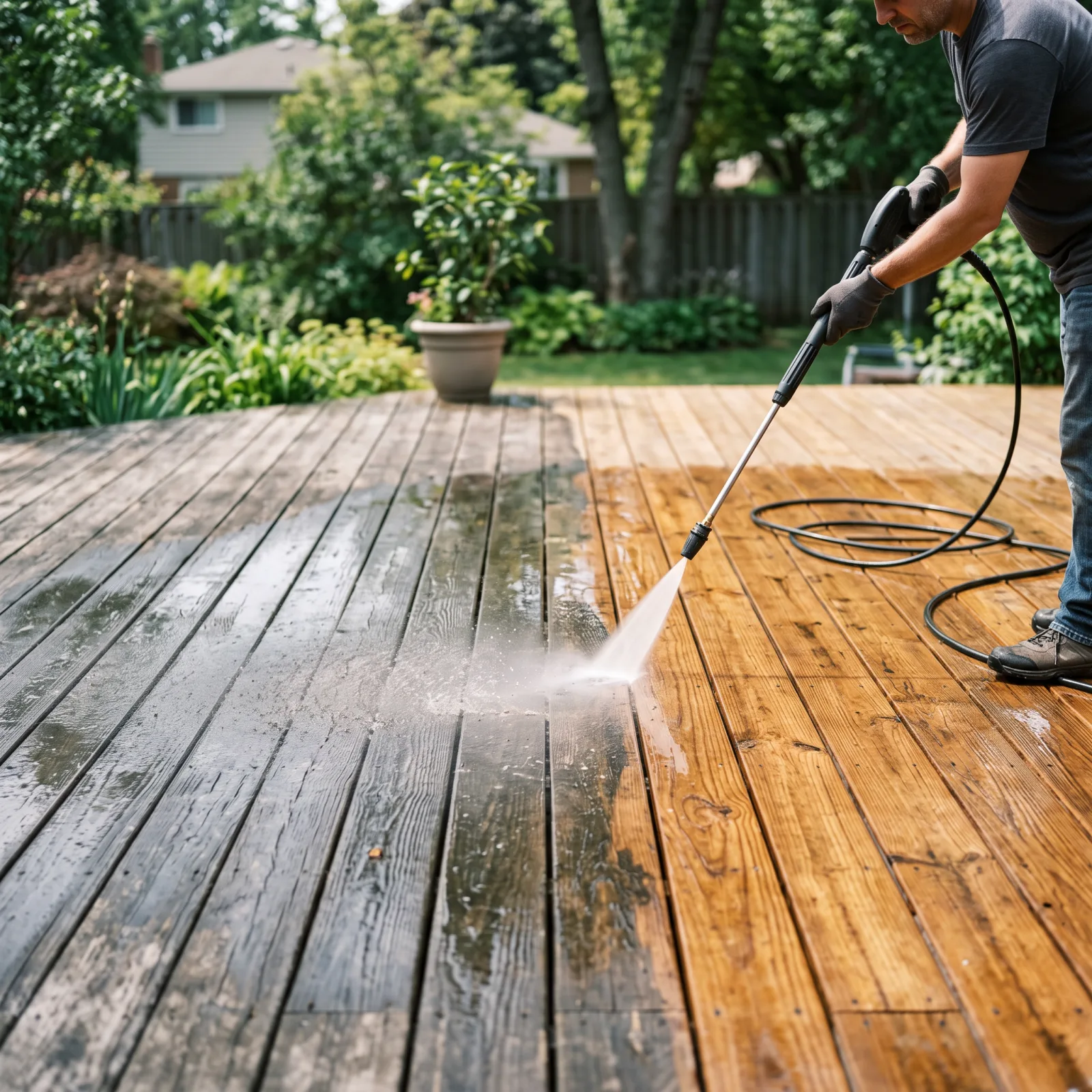
Deck & fence cleaning
Softwood decking and fencing — the pressure-treated pine and cedar most O'Fallon decks are built from — is the easiest surface on a property to ruin. Held too close or run too high, a pressure washer etches the grain and furs the surface fibers, and the damage does not wash out; it has to be sanded out. We work wood at low pressure with a wide fan tip kept moving along the length of the board, letting the cleaning solution do the work on the gray weathering and the mildew in the grain.
Timing matters more on wood than on any other surface. If you are staining or sealing afterward, the boards need to dry thoroughly first — plan on 48 hours of dry weather after the wash before anything goes down, longer if it stays humid. Sealing over wood that is still carrying moisture traps it under the finish and the coat fails early. If a stain job is the goal, book the wash with that window in mind rather than back-to-back.
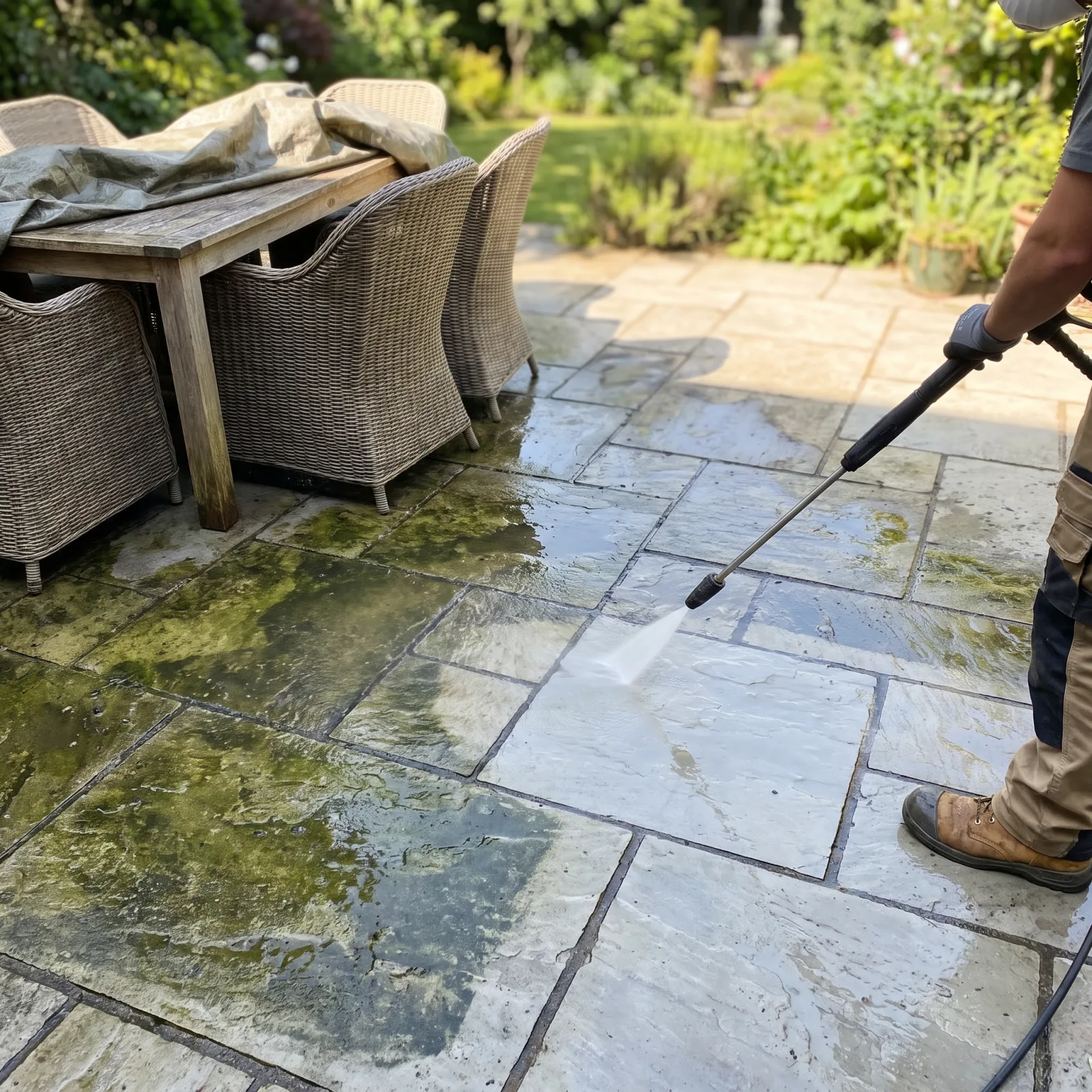
Patio & outdoor living cleaning
Patios, walkways and pool decks collect a different problem than driveways do: shaded, low-traffic hardscape grows moss and black algae in the joints and along the north edge, and that growth holds water against the stone. Paver patios wash at reduced pressure for the same reason paver driveways do — the joints are structural, and stripping them out is how a patio starts shifting underfoot.
Expect joint sand to come out on any paver wash, no matter how carefully it is done. That is normal and it is the reason a proper paver job ends with re-sanding the joints rather than just rinsing and leaving. Poured and stamped patios get the same lower-pressure treatment as stamped driveways to protect the release coat and any sealer. Pool decks get rinsed thoroughly afterward so nothing tracks into the water.
How Our O'Fallon Pressure Washing Service Works
-
1
Tell us what you need washed. Send the form below with a rough description — photos help but are not required.
-
2
We confirm scope and timing. Surface type and square footage drive the estimate, so we confirm before anything is scheduled.
-
3
We show up and clean it. You point; we wash. Nothing is charged until the scope is agreed.
Where We Offer Pressure Washing Near O'Fallon, IL
O'Fallon and the surrounding Metro East communities. O'Fallon counted about 32,000 residents at the 2020 census and Belleville about 41,000, and between the two of them sits most of the housing stock we work on — 1990s and 2000s subdivisions with vinyl or lap siding and poured concrete drives, which is exactly the combination that streaks.
Pressure Washing Guides for O'Fallon Homeowners
Straight answers to what people ask us before they book.
Pressure Washing Questions O'Fallon Homeowners Ask
Frequently asked questions we answer on the phone every week, written out so you do not have to call to get them.
How much does pressure washing cost in O'Fallon, IL?
There is no flat rate, because the two things that actually drive the price are square footage and surface type, and those vary enormously house to house. A 1,200 square foot driveway is a different job from a two-story house wash covering 2,500 square feet of siding, and both are different again from a deck that has to be worked by hand at low pressure. What we can tell you is how it is calculated: we measure the surfaces you want cleaned, identify what method each one takes, and quote those as separate line items so you can see what you are paying for and drop anything you would rather skip. Nothing is charged until that scope is agreed in writing.
How often should I have my house washed?
Exposure decides it, not the calendar. Most O'Fallon homes do well on a house wash every 1 to 2 years, but a house with heavy tree cover on the north side, or one that backs onto a field or a creek, can need it annually while a wide-open south-facing elevation goes several years without looking dirty. The practical test is to walk the shaded side of your house and look at the siding under the gables: if you can see gray-green streaking or a dark film that does not wipe off, it is due. Driveways are usually on a similar or slightly longer cycle; decks depend more on when you last sealed them.
Will pressure washing damage my vinyl siding?
Actual high-pressure washing can, which is why we do not use it on siding. Water forced at a driveway's pressure will go up behind vinyl lap panels and into the wall cavity, where it has no way to drain or dry. That is not a cosmetic risk, it is a moisture problem inside the wall. Siding gets soft washed instead — low pressure plus a cleaning solution that does the work chemically. Stucco and EIFS are even less forgiving; high pressure strips the finish coat off those outright, so they are soft wash only, no exceptions.
When is the best time of year to pressure wash in the Metro East?
Spring and early fall are the two best windows. Spring washing pulls out the road salt and winter grime that freeze-thaw cycling has worked down into the concrete, and it resets the algae growth before the humid stretch of summer feeds it. Early fall gets the season's dirt off before winter and gives you the dry weather a deck needs if you are staining. Mid-summer work is fine but cleaning solutions evaporate faster in direct heat, so those jobs run better in the morning. Hard freezes are the real constraint: we do not wash when temperatures are near or below freezing, because water on a driveway becomes an ice hazard.
Do I need to be home while you work?
No, as long as we have access to what needs cleaning and to an outside water spigot, and we have agreed the scope beforehand. Most homeowners are at work when we are there. What does help is a quick walkthrough — in person or over photos — before the day of, so nothing on your list gets missed and nothing that should have been left alone gets washed. If there are gates, dogs, delicate plantings, loose siding, an outdoor outlet you would rather we not use, or a sealed surface, tell us in advance and we will plan around it.
Tell us what needs cleaning
- Photos help but are not required to get started.
- We confirm scope and timing before anything is scheduled.
- Nothing is charged until the scope is agreed.